Mobile View

This content is fully accessible on mobile, but the desktop version still carries the full windowed experience.
Ogden, Utah

Daenon Janis

Executive Summary

Forward-Deployed AI Product Engineer

I build trusted AI workflow software across product, data, enterprise integrations, and security. My best work sits where founders and operators need a builder who can find the real problem, shape the product surface, wire the systems, and keep the trust model intact.

Why Teams Bring Me In

Teams bring me in when the work is too product-shaped for a ticket queue and too operationally sensitive for a quick demo. I can move from founder-level problem discovery to production AI workflows, data and integration plumbing, agent interfaces, and security decisions without handing off the hard parts.

SOC 2

Program built from scratch and carried through year two

0->1

AI and internal tools shipped for operator workflows

03

Named product proofs: Ludflow, MCPViews, DecidR

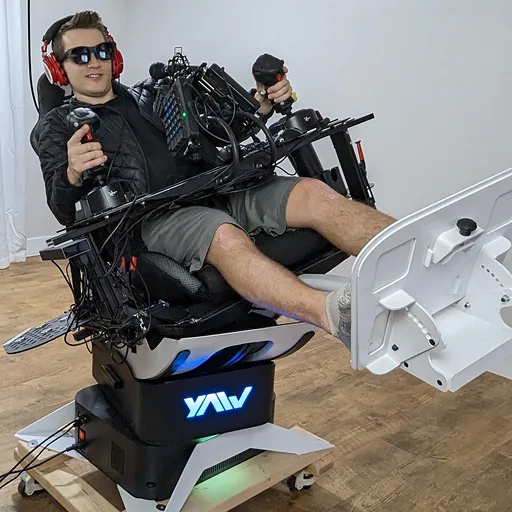
Daenon Janis in a flight simulator setup

Own the ambiguous middle

I work well where the problem is real, the requirements are incomplete, and the team needs someone to turn operator pain into a product-shaped first version.

Ship AI workflows people can trust

I care about AI when prompts, context, tools, permissions, and review surfaces become a reliable workflow instead of a fragile demo.

Connect product to real systems

The same builder can shape the interface, wire the data and business-system integrations, and reason about how the workflow survives production use.

Operate like a founder

I like broad ownership, fast learning loops, clear product bets, and work where the person building stays close to the business consequence.

  • Headline: Forward-Deployed AI Product Engineer | Trusted workflow software, enterprise integrations, agent interfaces.
  • Best proof: Ludflow, MCPViews, DecidR, plus Ivy Energy systems work that survived real security and operational constraints.
  • Based in Ogden, Utah and comfortable working with founders, operators, engineers, and non-technical subject matter experts.

AI Product Proofs

AI Products & Founder Work

The clearest proof of fit is the product work I am building around grounded AI workflows: Ludflow, MCPViews, and DecidR. Each one starts from the same belief that AI becomes useful when it is connected to real context, real systems, and real decision-making.

These projects show the kind of role I am aiming at: founder-level AI product ownership where the job is to find the wedge, design the workflow, build the product surface, and make the system trustworthy enough for people to depend on.

Ludflow

Commercial product thesis for grounded AI context

MCPViews

Open-source interface layer for agent workflows

DecidR

Decision and workflow layer for AI-native execution

In Brief

  • These projects are the resume's strongest proof that I can shape and ship AI product ideas.
  • The through-line is grounded context: AI has to know the real business, data, systems, and decision trail.
  • The product direction fits founder-led teams that need practical AI workflows, not demo theater.

Commercial product thesis

Ludflow

Ludflow is my privately owned platform for AI documentation, data governance, and grounded MCP context. It is built around the problem founders and operators keep running into: important business knowledge is split across code, schemas, documents, tools, and memory, then AI is expected to reason from fragments.

AI documentationData governanceGrounded contextCommercial product

Public technical proof

MCPViews

MCPViews is an open-source desktop companion that gives AI agents visual interfaces, plugin-aware review flows, and richer interaction patterns than plain chat alone. It is both a usable tool and a public product bet on where MCP-native software is going.

Open sourceAgent UIPlugin systemReview workflows

Workflow and decision layer

DecidR MCP

DecidR MCP is the initiative, architecture, and approval layer in the broader Ludflow ecosystem. It reflects how I think AI-native teams should coordinate larger slices of work: decisions, context, implementation, and stakeholder buy-in should stay connected.

AI-native teamsDecision workflowsExecution contextProduct coordination

Private product and company

Ludflow

Ludflow came from a recurring operational failure pattern: subject matter experts knew the problem, but the requirements handed to engineering were too vague to build from. The result was slow discovery, bad handoffs, and abandoned internal projects.

The product ties together business concepts, real system metadata, written process knowledge, and MCP-friendly AI context so teams can describe work in plain language without losing the technical truth underneath it.

For a founder or executive, this is the core signal: I do not treat AI product work as a model wrapper. I care about the workflow, the source of truth, the review surface, and the trust model that lets people rely on the output.

  • Connects business language to source systems, docs, schemas, and code reality.
  • Aims to make AI context auditable and useful across technical and non-technical teams.
  • Shows commercial product thinking around a concrete operational pain point.

Open-source product and ecosystem wedge

MCPViews

MCPViews started from a simple frustration: AI tooling was becoming more capable, but the interface layer was still too dependent on plain text. Many real workflows wanted tables, diagrams, structured review, and richer interaction.

I built MCPViews as a local rendering layer where agents can request the right interface, push only the minimum state, and let renderers or plugins fetch the rest through their own APIs.

The product proof is not just technical taste. It shows how I think through a workflow, design an interface layer, and build a tool that makes AI-assisted work easier to understand and review.

Decision and workflow layer in the Ludflow ecosystem

DecidR MCP

DecidR MCP extends the same product thesis into planning and execution. It is built around the idea that AI-native teams need decisions, architecture context, approvals, and implementation work to stay connected as work moves asynchronously.

That matters because many AI workflows fail at the coordination layer, not the model layer. DecidR is my answer to that gap: keep the important decisions attached to the work so teams can move faster without losing accountability.

  • Built for AI-native collaboration rather than ticket-only project management.
  • Connects decisions, documentation, implementation context, and stakeholder review.

Operating Proof

Ivy Energy Impact

Ivy Energy is the operating proof behind the product story. I have spent the last several years owning cross-functional systems work where security, data movement, internal tooling, and business operations all had to work in the real world.

For an AI product or internal platform role, the important signal is not a job title alone. It is that I have already carried ambiguous, high-trust systems work from discovery through implementation, adoption, compliance, and ongoing maintenance.

SOC 2

Security program built from scratch and maintained

Data layer

Core workloads and reporting modernized for downstream use

AI tools

Secure workflows shipped for non-engineering teams

In Brief

  • Ivy proof in plain English: I built the SOC 2 program, modernized the data layer, wired business systems together, and shipped secure AI-assisted internal workflows.
  • Strongest signals: SOC 2 ownership, Snowflake data movement, Salesforce/Zendesk/Odoo/Slack integrations, secure AI workflows, and business-system integration.
  • Best-fit roles reward cross-functional product ownership and practical execution under real constraints.

Ivy Energy

Current role

I currently work as a Data Engineer and Senior IT Security Solutions Architect. In practice, I own the glue work companies usually split across security, data, operations, and product engineering: SOC 2 controls and evidence, Snowflake data movement, Salesforce/Zendesk/Slack/ClickUp/Odoo integrations, and secure internal tools or AI-assisted workflows for teams that need working software now.

SecurityData engineeringSystems integrationInternal tools

Impact

Operating outcomes

The strongest outcomes map directly to the roles I want next: secure AI workflows, data movement, business-system integration, and product-minded ownership of work that crosses departments. The important part is that these were production responsibilities, not side experiments.

  • Built Ivy Energy's SOC 2 program from a blank slate: scoped controls, access reviews, evidence collection, vendor and security processes, engineering and operations buy-in, then carried the program through year two.
  • Modernized core systems and data architecture with minimal downtime, moving operational and product data into Snowflake and reporting-ready downstream workflows.
  • Built and maintained integrations across Salesforce, Zendesk, Slack, ClickUp, Odoo, Snowflake, and other business-critical systems so support, operations, finance, and product data could actually move.
  • Helped non-engineering teams ship secure AI-assisted tools for support, communications, operations, and cross-system workflows without creating avoidable product, data, or deployment risk.

Role fit

Why it transfers

This is the same muscle a founder or executive needs in AI product work: understand the messy operating reality, find the product wedge, wire the systems underneath it, and keep the risk model visible while moving quickly.

AI product ownershipInternal platformsWorkflow softwareTrusted execution

Data Engineer & Senior IT Security Solutions Architect | 2020 - Present

Current work at Ivy Energy

My role at Ivy sits at the intersection of data engineering, security architecture, and internal product delivery. I get pulled into work that spans departments, touches critical systems, and cannot be cleanly owned by a single narrow specialty.

That has meant maintaining compliance and security obligations, modernizing database and analytics infrastructure, building integrations across operational systems, and helping teams outside core engineering ship software that materially improves how they work.

What I actually own

Scope and responsibility

  • Owned SOC 2 readiness and ongoing compliance through real controls across engineering, operations, access management, vendor review, evidence collection, and process ownership.
  • Migrated core workloads off older systems and modernized the data layer so operational and product data could move cleanly into Snowflake, reporting models, automations, and downstream workflows.
  • Built production integrations and sync workflows across Salesforce, Zendesk, Slack, ClickUp, Odoo, Snowflake, and other business-critical internal systems.
  • Created secure internal apps and AI-assisted workflows for teams that needed working software quickly without creating avoidable product, data, permission, or deployment risk.
  • Defined the practical trust model around internal tools: who can access the workflow, what data it touches, where review is required, how it is deployed, and who owns it after launch.
  • Translated between technical and non-technical teams so operator pain could become deployable software instead of getting stuck as a vague request.

Founder and executive signal

Why this matters for AI product work

AI product work fails when it ignores the operating environment around the model: permissions, data quality, review loops, system boundaries, user adoption, and ongoing ownership. Ivy gave me years of practice with exactly those constraints.

That is why I am most interested in roles that combine product usefulness, secure architecture, data systems, and practical delivery rather than narrowing into a single specialty.

Capability Map

Four Leverage Zones

My value is not a long keyword inventory. It is the combination that lets me turn an unclear operating problem into trusted software: AI workflow design, data and business-system integration, secure architecture, and product delivery.

That range matters most in founder-led, early, or cross-functional environments where the builder has to understand the user, shape the product, wire the systems, and make sensible trust decisions in the same loop.

In Brief

  • The mix matters more than any single tool: AI product, data systems, security, and communication in one builder.
  • I am strongest when the work crosses team boundaries and nobody else cleanly owns it.
  • Business systems, cloud, and AI tooling show up because they are part of real delivery, not resume decoration.

AI product layer

AI workflow and product design

I design AI workflows as products: prompts, context, tools, retrieval, review, and interface choices need to work together for a real user and a real job.

MCPAgent interfacesLangChainLangGraphVector databasesHuman review

Operational layer

Data and business-system integration

I am comfortable underneath the product surface where data movement, CRM and ERP systems, APIs, and warehouse models decide whether the workflow actually works.

SQLSnowflakedbtSalesforceZendeskOdooETL / ELT

Trust layer

Secure architecture and compliance

Because I came up through security and IT architecture, I think about permissions, controls, auditability, deployment risk, and maintainability while the product is still being shaped.

SOC 2RBACSecure deliveryVulnerability scanningAWSKubernetes

Builder layer

Product delivery and communication

I can work with founders, operators, subject matter experts, and engineers to turn vague pain into a useful first version, then harden it into something a team can keep using.

TypeScriptReactNext.jsNode.jsPythonRequirements shapingDocumentation

Using AI as a real software layer

AI workflow and product design

I do not think about AI as calling a model and hoping for the best. The interesting work is designing how prompts, context, retrieval, tool use, human review, and interfaces fit together into something reliable enough to matter.

That is why MCPViews, Ludflow, and DecidR all focus on grounded context, reviewable output, and workflow shape. The product question is always: what does the user need to trust this, and what system context does the AI need to be useful?

  • MCP-native interfaces and tool ecosystems
  • Prompt and context design tied to workflow quality
  • Human-in-the-loop review patterns for higher-trust AI systems
  • Clear judgment about when not to use an LLM

The systems underneath the product

Data and business-system integration

I am comfortable working where the real operational complexity lives: relational databases, warehouses, vector stores, reporting models, API integrations, and the vendor systems teams use every day.

That has included moving data from Postgres and internal systems into Snowflake, reshaping architecture to lower cost and improve maintainability, and building integrations across Salesforce, Zendesk, Slack, ClickUp, Odoo, and adjacent business tooling.

  • SQL, warehouse modeling, and downstream reporting for business use
  • Relational, document, cache, and vector database patterns
  • API integrations and sync workflows across internal and vendor systems
  • CRM, ERP, support, and product operations fluency

Speed with a trust model

Secure architecture and compliance

I do not treat security as something to paste on after the product exists. I naturally think about access, controls, auditability, data handling, deployment boundaries, and who owns the system after launch.

That background is especially useful for AI-enabled internal tooling because the fastest path is rarely the safest long-term path, and the safest path still has to let the business move.

  • SOC 2 controls across departments for a maturing software company
  • RBAC, code review, vulnerability scanning, and operational controls
  • AWS, Kubernetes, load balancing, security groups, and deployment fundamentals
  • Secure delivery patterns for internal tools touching sensitive data

Turning ambiguity into shipped software

Product delivery and communication

I am strongest when the workflow is messy, the requirements are incomplete, and the team needs someone who can talk to people closest to the pain, define a useful first version, and ship it.

That includes choosing the right stack for the job instead of forcing every problem into the same shape. I care about UI and UX because even strong internal software fails if people do not want to use it.

  • Product shaping with founders, operators, and semi-technical stakeholders
  • Web, backend, desktop, and mobile product thinking in the same delivery loop
  • Fast first versions followed by architectural hardening
  • Documentation and explanation that reduce ambiguity instead of adding more

About Me

Builder Temperament

The personal through-line is simple: I like understanding how things work, taking them apart, rebuilding them, and turning curiosity into something useful. That instinct started with hardware and repair work before it became a career in software, security, data, and product systems.

This section is here to add texture, not to repeat the resume pitch. The important signal is temperament: hands-on curiosity, practical ownership, and a bias toward building things that survive contact with real life.

Family photo of Daenon Janis, Julie Janis, and their child outdoors

In Brief

  • Raised across the mountain west and now based in Ogden, Utah.
  • Technology was the hobby before it was the career: DIY computers, repairs, and gadget obsession.
  • Family life keeps the work grounded in something bigger than product ambition.

Early instincts

Technology was the hobby first

I grew up building computers, repairing phones, chasing new gadgets, and wanting to understand the systems underneath the surface. I still approach software with that same hands-on curiosity.

  • DIY computers and hardware curiosity
  • Phone repair and practical troubleshooting
  • Early adopter instinct paired with builder energy

Operating style

How I build

I care about getting to a useful first version quickly, then hardening it so people can keep depending on it. Speed matters most when it compounds into trust rather than cleanup.

OwnershipSystems thinkingClarityBias to action

Family

Home life now

I live in Ogden, Utah with my wife Julie, who is a YA fantasy author, and our son Orion. We also have one more child on the way.

Ogden, UtahFamily lifeJulie JanisPersonal

Before it was a job

Builder temperament

I was always drawn to new technology, but I was never satisfied just being a consumer. I wanted to know how the thing worked, how to fix it, and how to make it better or make it mine.

That curiosity still shapes how I approach product work. I like getting close enough to the real system to understand the constraints, then building something that makes the next round of work easier.

Communication style

How I work with people

A lot of my work depends on listening carefully to people who are close to the problem but are not traditional software builders. I like helping them articulate what is broken, tightening the logic, and turning the result into something technical teams can build from.

That is one reason founder and early-stage environments make sense for me. I enjoy broad ownership, clear writing, and staying close enough to the details that strategy still turns into shipped systems.

The chapter I am in now

Family and home life

Family photo of Daenon Janis, Julie Janis, and their child outdoors
Family photo from life in Ogden, Utah.

Family life matters a lot to me, and it has added a different kind of perspective to ambition, work, and how I think about the future.

Julie being a YA fantasy author means our home has a fun mix of technology, storytelling, product ideas, and creative work happening under the same roof. It is a good reminder that building things can take a lot of forms.

Start A Conversation

Contact

If you are looking for someone to own an ambiguous AI product, internal platform, workflow automation, or founder-led special project, email is the best place to start.

The most useful conversations are usually about messy operational problems that need to become secure, usable software.

In Brief

  • Best starting point: email.
  • Strongest-fit conversations involve AI products, internal platforms, workflow software, and founder-led special projects.
  • I prefer one clear route over a cluttered contact stack.

Primary route

Email

Reach out for AI product roles, internal platform work, founder or executive special projects, consulting, or conversations around Ludflow and MCP-native tools.

AI product rolesInternal platformsFounder projectsConsulting